Why Your Friendships Get Harder Every September
Quick Answer: Summer socializing runs on low-effort infrastructure — long daylight, outdoor spaces, spontaneous plans, and flexible schedules. Autumn removes all four at once, so the same friendships suddenly require deliberate scheduling that they never needed before. The fix is to replace what disappeared with structure: a recurring commitment beats a series of individually negotiated plans.
Every September the group chat gets quieter, plans start taking three weeks to arrange, and you find yourself wondering whether something is wrong with a friendship that felt easy in July.
Nothing is wrong. The scaffolding fell away.

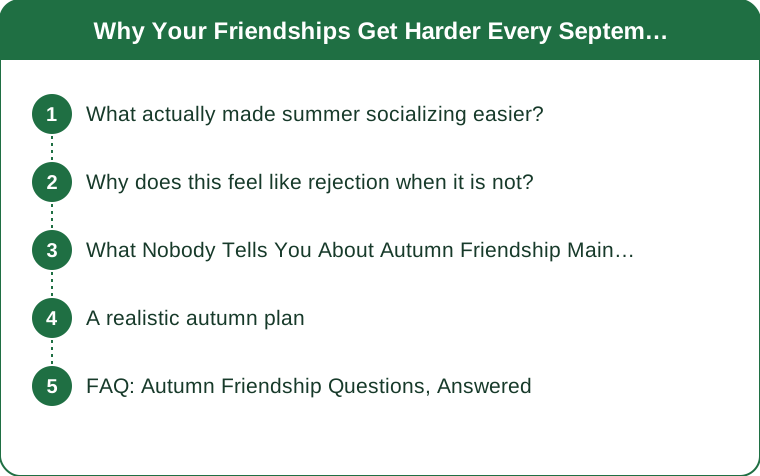
What actually made summer socializing easier?
Four things, all of which are environmental rather than emotional.
1. Daylight. Long evenings mean the window for after-work socializing is wide and it does not feel late. In September that window narrows by a minute a day, and by late October, leaving work means leaving into darkness. Darkness makes going home feel correct in a way that has nothing to do with how tired you are.
2. Outdoor space is free and low-commitment. A park, a patio, a walk. Outdoor meeting places require no reservation, no cost, and no fixed end time, which makes spontaneous plans genuinely easy. Once it is cold, socializing moves indoors, and indoor socializing means either someone’s home — which requires tidying and hosting — or a paid venue.
3. Schedules were loose. School holidays, vacation time, a general seasonal slackening. Autumn returns everyone to a fixed weekly structure at once.
4. Spontaneity was viable. In summer, a text at 4pm can become plans at 6pm. In autumn, everything gets scheduled, and scheduled plans are both harder to make and easier to cancel.
The compounding effect: each of these makes the others harder. Fewer spontaneous meetings means more reliance on scheduling, and scheduling takes effort, and effort makes plans fragile.
Why it feels personal: you experience a friend as less available without seeing the four structural reasons. And they experience the same thing about you.
Why does this feel like rejection when it is not?
Because the visible signal — fewer plans, slower replies, more cancellations — looks identical to a friendship cooling off.
The two situations produce the same evidence. A friend who is genuinely drifting and a friend who is buried under a September work ramp-up both text less and cancel more. You cannot distinguish them from the outside, and the human default is to read ambiguity as rejection.
Autumn also stacks other stressors. Return to school schedules, quarterly work deadlines, the general seasonal intensity of the last months of the year. Reduced daylight affects mood and energy for a meaningful share of people, which reduces social initiative independent of anything else.
And the withdrawal is mutual and invisible. You are also texting less. Both people quietly conclude the other has pulled back.
What actually distinguishes drift from a busy season: the response when contact is made. A friend in a hard season responds warmly and cannot make plans. A friendship that is genuinely fading responds tepidly whether or not plans happen. That difference is reliable and it is worth more than counting messages.
The practical implication: before concluding anything, initiate once, clearly and without testing. A vague we should catch up sometime is not initiating; a specific proposal with a date is, and the quality of the response tells you what you want to know.

What Nobody Tells You About Autumn Friendship Maintenance
Recurring beats scheduled. This is the single most useful thing in this article. A standing arrangement — first Tuesday of the month, every other Sunday walk, a Thursday call — eliminates the negotiation that kills autumn plans.
The negotiation is the barrier, not the meeting. Once a plan requires three rounds of texts across two weeks, it has a high chance of not happening, and each failure makes the next attempt feel heavier. A recurring slot removes the decision entirely.
Lower the bar for what counts. Summer friendship happens over hours. Autumn friendship can happen over twenty minutes. A walk, a coffee, a phone call while doing something else all count and all maintain a relationship. Waiting for a proper catch-up means waiting until January.
The phone call is underrated and everyone has abandoned it. A 15-minute call requires no travel, no venue, no tidying, and no weather. It is the highest-efficiency friendship maintenance available and most people under 45 will do almost anything to avoid it. Try scheduling one and notice how much easier it is than dinner.
Daytime is easier than evening in autumn. Once it is dark at 5pm, evening plans require overcoming a strong pull toward home. A weekend morning walk or a weekday lunch faces almost none of that resistance, and it costs the same amount of time.
Say the quiet part. I always go quiet in the fall and it is never about you is a sentence that resolves an enormous amount of unspoken anxiety on both sides. Almost nobody says it.
Group plans are harder than one-on-one right now, not easier. Coordinating four calendars in autumn is roughly four times the failure risk. One-on-one plans are what actually happen between September and December.
A realistic autumn plan
Pick two people, not ten. Trying to maintain every friendship at summer intensity through autumn fails for everyone. Choose two relationships to actively protect this season and let the others run on lower contact without guilt. They will still be there.
Set one recurring thing with each. Same day, same rough time, repeating. It does not need to be frequent — monthly is genuinely enough to keep a friendship warm.
Default to daytime and to shorter. A Saturday morning walk beats a Friday dinner in both attendance rate and how you feel afterward.
Reply to the group chat even when you have nothing. Group chats die by attrition, and one person responding keeps them alive. This costs almost nothing and it is the difference between a chat that revives in spring and one that does not.
When you cancel, reschedule in the same message. Can’t make Thursday — free the following Tuesday? preserves the plan. A bare cancellation puts the whole negotiation back at the start, and that is where autumn plans go to die.
Accept a lower baseline without treating it as failure. Friendships have seasons and a quieter autumn is not a decline. The goal is contact frequent enough that spring picks up where you left off, not maintaining July’s rhythm through November.
FAQ: Autumn Friendship Questions, Answered
How do I tell if a friend is just busy or actually pulling away?
Make one specific, dated proposal and read the warmth of the response rather than the answer. A busy friend says no warmly and suggests something else. A fading friendship responds flatly either way.
Is it worth bringing up that we see each other less?
Only if you frame it as a shared observation rather than a complaint. Saying you always go quiet in autumn and it is never personal usually gets a relieved agreement, because they were thinking it too.
What if I am the one who does not want to make plans?
That is legitimate and seasonal social withdrawal is extremely common. Protect one or two relationships with low-effort recurring contact and let the rest rest. That is maintenance, not neglect.
Do friendships genuinely weaken over a quiet autumn?
Established friendships tolerate months of low contact well. Newer friendships — under a year or so — are considerably more fragile, and those are the ones worth prioritizing if you have to choose.
TL;DR: Autumn removes the infrastructure that made summer socializing effortless.
- Four things disappear at once: daylight, free outdoor spaces, loose schedules, and viable spontaneity.
- The withdrawal is mutual and invisible, so both people conclude the other pulled back.
- Recurring beats scheduled. A standing monthly slot removes the negotiation that kills autumn plans.
- Lower the bar — twenty minutes counts. Waiting for a proper catch-up means waiting until January.
- Daytime beats evening once it is dark at five, and one-on-one beats group plans by a wide margin.
- Reschedule in the same message you cancel in. A bare cancellation restarts the whole negotiation.
Pick two people this week and propose one repeating thing to each. That single move does more than a season of good intentions.
Keep Reading
This article is for general informational and styling purposes only. Fit, sizing, and product availability may vary.