Where Do Adults Actually Make New Friends? The Places That Work (and Don't)
Quick Answer: Adult friendships form fastest in settings with repeated, unplanned contact — a recurring class, a regular volunteer shift, a standing group activity — not one-off events like parties or apps. Repetition beats charisma every time.
You’re not bad at making friends. You’ve just been trying in the wrong places — one-time events that end the moment they’re over, with no built-in reason to see the same people again next week.

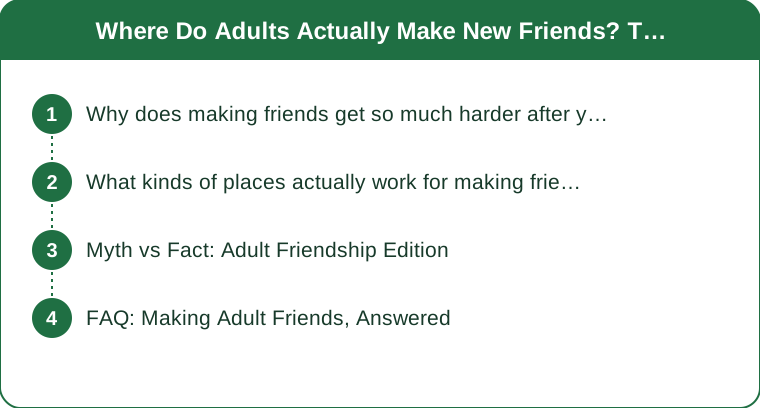
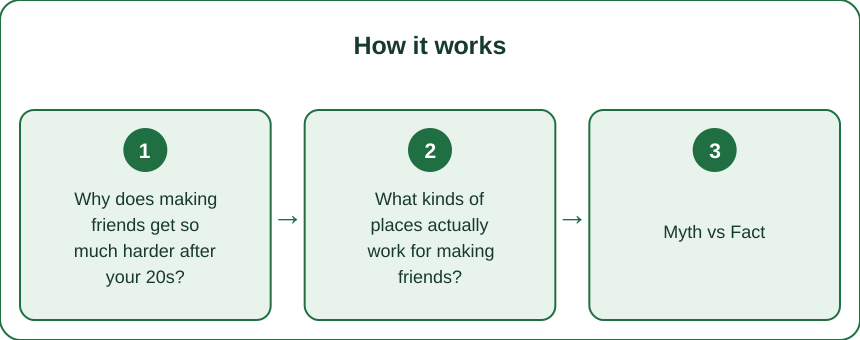
Why does making friends get so much harder after your 20s?
Because the structures that used to force repeated contact disappear — school, dorms, early-career social events. Adult life replaces them with nothing automatic, so friendship stops happening by default and has to be built on purpose.
The research term for this is the ‘proximity + repetition’ effect: closeness forms through repeated low-stakes contact over time, roughly 40-60 hours of it, according to friendship-formation studies — not one great conversation.
What kinds of places actually work for making friends?
Anything with built-in repetition works better than a single event:
- Recurring classes (same pottery studio, same running club, same weekly trivia team)
- Volunteering on a regular shift, not a one-off cleanup day
- Interest-based groups that meet weekly or biweekly, not monthly
- Neighbors you see routinely — a dog park at the same time each day counts
The common thread: you’ll see the same faces again next week without having to arrange it.

Myth vs Fact: Adult Friendship Edition
Myth: Friendship apps are the modern solution. Fact: They’re a decent way to schedule a first coffee, but they skip the repetition step entirely — most matches fade after 1-2 meetups unless you both independently join a recurring activity together.
Myth: You need to be more outgoing to make friends as an adult. Fact: Extroversion helps the first conversation, not the friendship. Consistency of contact predicts closeness far more than how charming that first chat was.
Myth: Real friendships should feel effortless. Fact: Adult friendships take deliberate scheduling for the first several months. The ‘effortless’ feeling comes later, after the repetition has done its work.
FAQ: Making Adult Friends, Answered
How long does it typically take to become real friends with someone new?
Friendship research puts casual-to-close friend at roughly 50 hours of shared time, and acquaintance-to-friend around 40-60 hours — meaning weekly contact over 2-3 months, not a handful of hangouts.
Is it weird to ask someone to hang out one-on-one after meeting in a group?
No — most people are relieved when someone else initiates. Frame it low-pressure: ‘grabbing coffee before next week’s class, want to come?‘
What if my new city has no obvious recurring groups?
Start one. A monthly book club or standing walk invite posted in a local app often gets more replies than expected, and you control the repetition from day one.
TL;DR:
- Adult friendships form through repeated, unplanned contact — not one-off events
- Recurring classes, regular volunteer shifts, and weekly groups beat friendship apps for staying power
- Budget roughly 40-60 hours of shared time before a friendship feels solid
- If nothing recurring exists nearby, start one — you’ll control the repetition
Pick one recurring thing this month and show up to it four times in a row. That’s the whole strategy.
Keep Reading
This article is for general informational and styling purposes only. Fit, sizing, and product availability may vary.