The Friendship That Just Faded — Why It Hurts More Than One That Ended in a Fight
Quick Answer: Fading friendships hurt more than fights because there’s no clear cause to process or resolve — your brain keeps searching for an explanation that doesn’t exist. Naming the loss explicitly, even just to yourself, is what closure looks like when there’s no conversation to have.
There was no fight. No last text that went too far. Just… slower replies, then no replies, then you both quietly stopped trying. That kind of ending is oddly harder to grieve than a blowup, and there’s a real reason why.

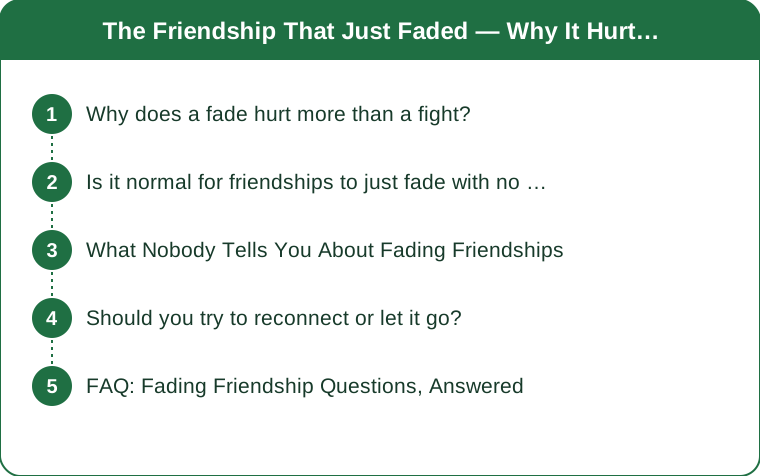
Why does a fade hurt more than a fight?
A fight gives you a story: this happened, that was said, here’s why it ended. A fade gives you nothing to point to — and human brains are uncomfortable with unresolved narratives, so you keep replaying small moments looking for the ‘real’ reason.
This is sometimes called ambiguous loss — grief without a clear cause or closure — and research on it shows it’s genuinely harder to process than loss with a defined event.
Is it normal for friendships to just fade with no reason?
Extremely normal — most adult friendships end this way, not with conflict. Life stage changes (new job, kids, moving, a new relationship) quietly shift how much bandwidth two people have for each other, and neither person consciously decides to end things.
The absence of a dramatic cause doesn’t mean something went wrong between you. It usually means circumstances changed faster than the friendship’s maintenance habits did.

What Nobody Tells You About Fading Friendships
Here’s what surprises people most: you’re often allowed to miss someone you’d never choose to be close friends with again, if you met them today. Nostalgia for who you were together doesn’t obligate you to rebuild the current relationship — those are two separate, both-valid feelings.
Also surprising: reaching out after a long fade is far less awkward in practice than it feels in your head. Most faded friends report relief, not confusion, when someone finally names the gap out loud.
Should you try to reconnect or let it go?
Ask one honest question: do you miss this specific person, or the life stage you shared with them? If it’s the person, a low-stakes reach-out — a short, warm message with no expectation attached — is worth sending.
If what you actually miss is being 22 and having endless time for friendship, no reconnection will recreate that, and it’s fairer to both of you to let the fade stand and grieve the season, not the person.
FAQ: Fading Friendship Questions, Answered
Should I ask a faded friend why we drifted apart?
You can, gently and without accusation — ‘I’ve thought about you, I think life just got busy for both of us’ opens the door without demanding an explanation neither of you may have.
Is it okay to grieve a friendship that just faded?
Completely — ambiguous loss is real grief, even without a dramatic ending. Naming it to yourself or a trusted person is often the only closure available, and it’s enough.
How do I stop friendships from fading in the future?
Small, low-effort consistency beats big gestures — a regular standing call, even monthly, survives busy seasons that spontaneous plans don’t.
TL;DR:
- Fades hurt more than fights because there’s no clear cause to resolve — this is ambiguous loss, and it’s genuinely harder to process
- Most adult friendships end this way; it’s not a sign something went wrong
- You can miss someone without wanting to rebuild the current relationship — both feelings are valid
- Small, consistent contact (a standing monthly call) prevents future fades better than big gestures
Name the loss even if there’s no one to name it to — that’s what closure looks like here.
Keep Reading
This article is for general informational and styling purposes only. Fit, sizing, and product availability may vary.