Friendship Burnout Is Real: 5 Signs You're Running on Empty With a Friend
Quick Answer: Friendship burnout shows up as dreading contact instead of looking forward to it, feeling drained rather than recharged after time together, one-sided emotional labor, resentment building quietly, and relief rather than sadness when plans cancel. These are fixable signals, not proof the friendship is over.
Somewhere along the way, texting this friend back started feeling like a chore instead of something you looked forward to — and that shift is worth paying attention to before resentment quietly takes over the whole relationship.

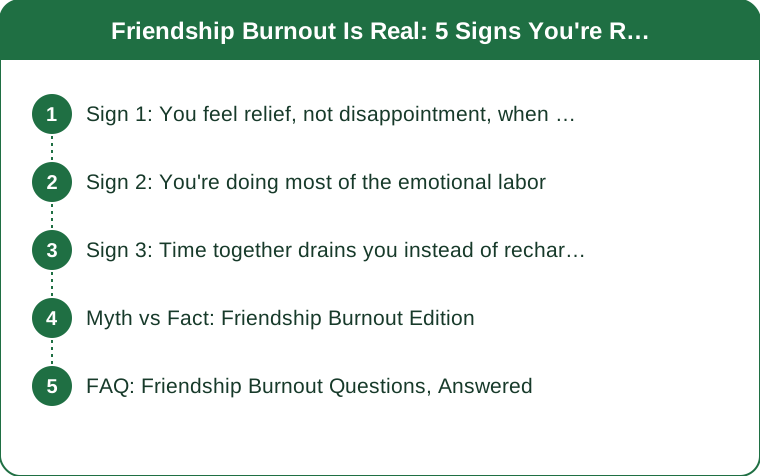
Sign 1: You feel relief, not disappointment, when plans get cancelled
This is often the clearest signal of all. A healthy friendship makes cancelled plans feel like a genuine loss; burnout flips that into quiet relief, which is worth noticing rather than dismissing as ‘just being tired lately.‘
Sign 2: You’re doing most of the emotional labor
Consistently being the one who initiates, remembers details, and shows up for hard moments — without much reciprocity — creates a slow, compounding depletion that doesn’t announce itself the way a single bad conversation would.

Sign 3: Time together drains you instead of recharging you
A friendship should, on balance, leave you feeling better than before, even after hard conversations. If you consistently feel more tired, tense, or smaller after time together than before it, that’s a pattern worth examining rather than a one-off bad day.
Myth vs Fact: Friendship Burnout Edition
Myth: Burnout means the friendship is over. Fact: Burnout is often a signal to adjust boundaries or expectations, not necessarily end things — many friendships recover once the imbalance is actually named.
Myth: If it were a real problem, you’d have noticed it sooner. Fact: Friendship burnout builds gradually, often over months, which is exactly why it’s easy to miss until resentment has already accumulated.
FAQ: Friendship Burnout Questions, Answered
How do you bring up friendship burnout without ending the friendship?
Framing it around your own capacity — ‘I’ve been stretched thin lately and need to scale back how often I can be available’ — tends to land better than framing it as a complaint about the other person.
Is it normal to feel burnout with a close, long-term friend?
Yes, especially through major life transitions (new parenthood, career shifts, grief) where one person’s needs temporarily outweigh the other’s — long friendships often cycle through imbalanced seasons and recover.
When is friendship burnout a sign to actually step back permanently?
If naming the imbalance directly leads to no change over several months, or the relationship consistently feels one-directional despite discussion, that’s a legitimate signal to reduce investment rather than keep pushing.
TL;DR:
- Relief (not disappointment) at cancelled plans is a strong early burnout signal
- Consistently carrying the emotional labor alone compounds quietly over time
- Feeling drained rather than recharged after time together is worth examining
- Burnout usually calls for a boundary conversation, not an automatic ending
Naming the pattern to yourself first is the actual first step — most friendship burnout is addressable once it’s not just a vague, unnamed feeling anymore.
Keep Reading
This article is for general informational and styling purposes only. Fit, sizing, and product availability may vary.